Strategic Infrastructure Proposal

Passive Engineered
Protection
For Fuel Storage
Tanks

Multi-layer risk reduction for critical energy infrastructure. No hot work. No shutdown. UAE-licensed contractor.

No Hot Work Required
No Tank Shutdown
UAE Licensed
Fast Deployment 4–6 Weeks
Request Site Assessment View Solution
Scroll to Explore
3000+
Tanks Serviced
4–6
Weeks Single Tank
0
Hot Work Required
25%
Cost Saving — Group Deploy

The Vulnerability

Conventional storage tanks leave critical upper-zone equipment exposed. Even minor incidents trigger operational shutdowns and fire escalation risks.

01
Roof Equipment Exposure
Critical components — valves, measuring nodes, ventilation systems, access hatches — remain exposed to upper-zone impact scenarios, creating single points of failure.
02
Operational Disruption
Damage to roof-level instrumentation and safety systems can trigger immediate operational shutdowns, affecting inventory management, regulatory compliance, and supply continuity.
03
Fire Escalation Risk
Compromised roof structures lead to rapid fire escalation, vapor release, and potential domino effects across tank farm configurations with catastrophic consequences.
04
Asymmetric Threat Vectors
Emerging aerial threats access tanks from above, bypassing traditional perimeter security. Upper-zone infrastructure requires dedicated passive protection layers.
INDUSTRY DATA: Atmospheric storage tank fires, while rare, can have catastrophic consequences. Environmental and aerial factors initiate 38% of accidents. — Journal of Failure Analysis and Prevention, 2020
No Hot Work
No Tank Shutdown
No Load on Tank
Bolt-Assembly Only
Fast Deployment

Our Solution

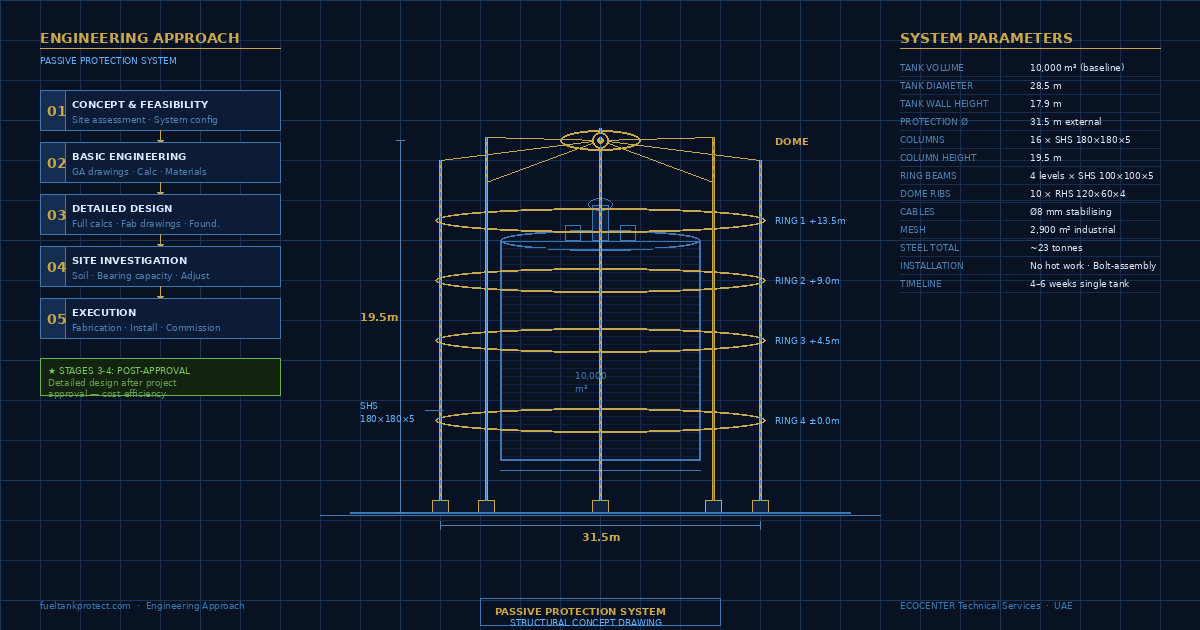
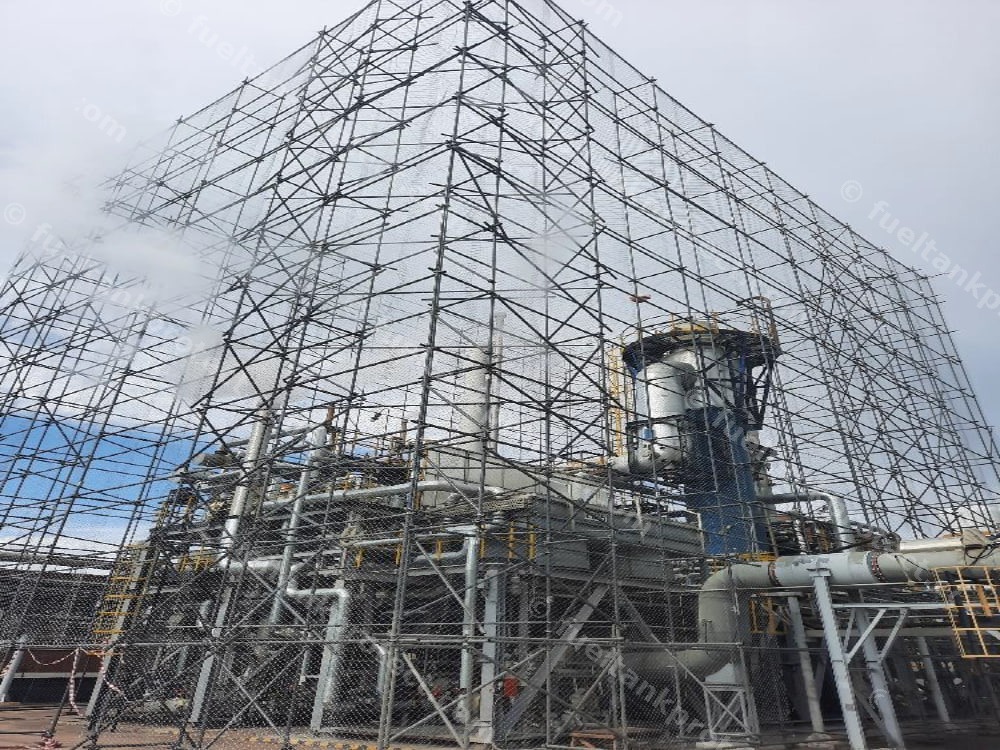
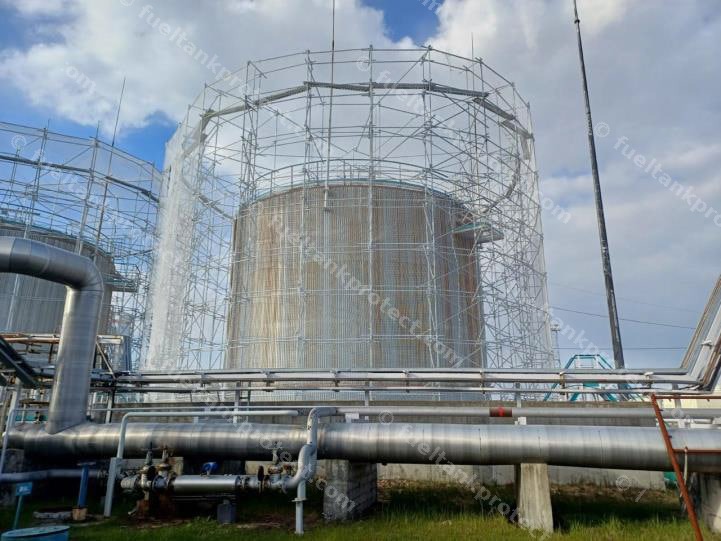
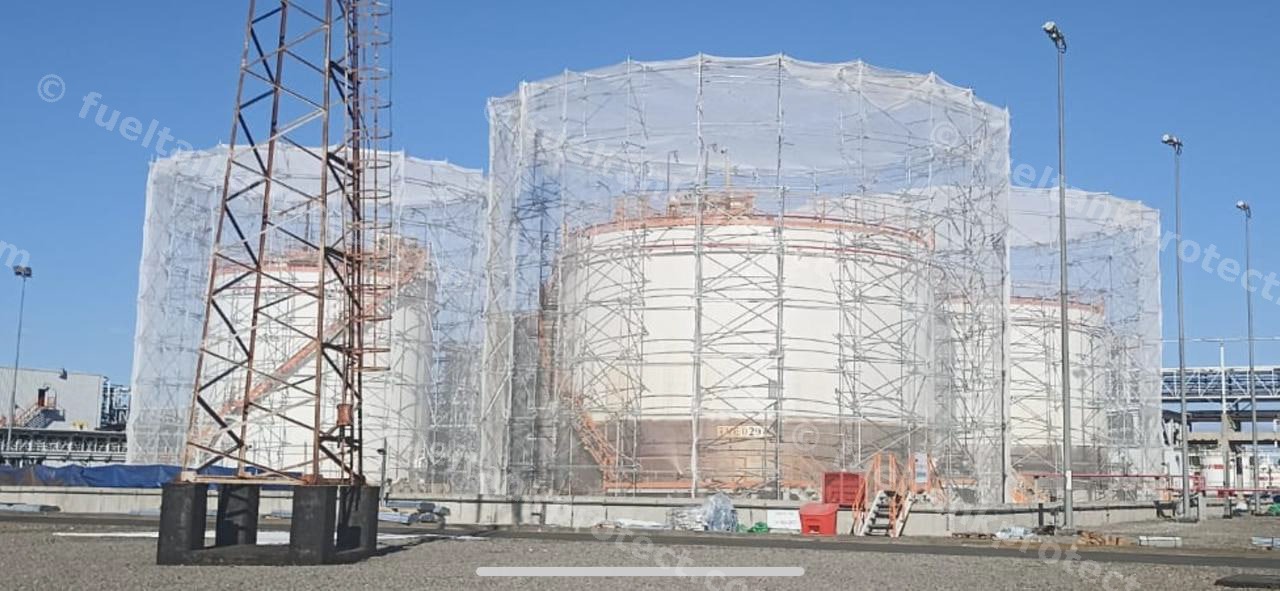
A passive multi-layer protection system — fully independent from the tank, installed without hot work or shutdown.

DOME RING 1 RING 2 RING 3 RING 4 19.5 M
01
Independent External Structure
Steel columns on separate reinforced concrete foundations — no primary load transfer to tank shell or roof. Preserves original structural integrity and tank warranty.
02
Multi-Level Ring Beam System
Horizontal ring beams and diagonal bracing at 4 levels create a rigid structural cage around the tank perimeter, distributing loads to independent foundations.
03
Lightweight Dome Coverage
Upper support ring with segmented dome geometry and top mesh barrier provides comprehensive upper-zone protection for roof-mounted equipment.
04
Vertical Perimeter Shielding
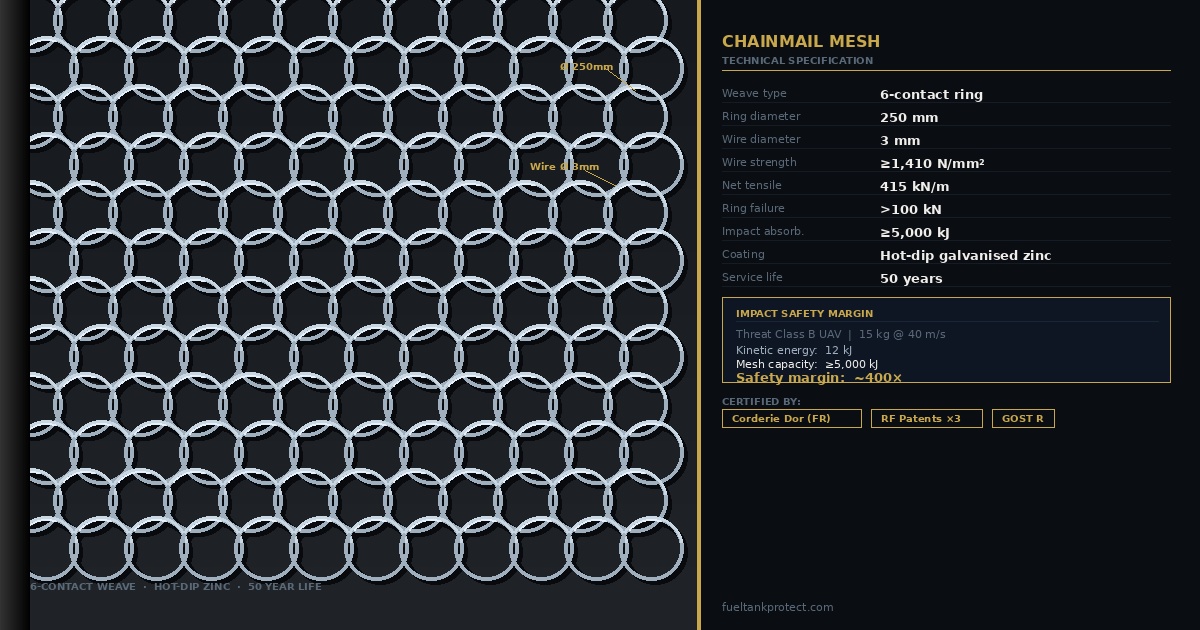
High-strength steel mesh extending from foundation to upper ring creates a continuous protective envelope. Double-layer option available for enhanced mitigation.
05
Modular Bolt Assembly
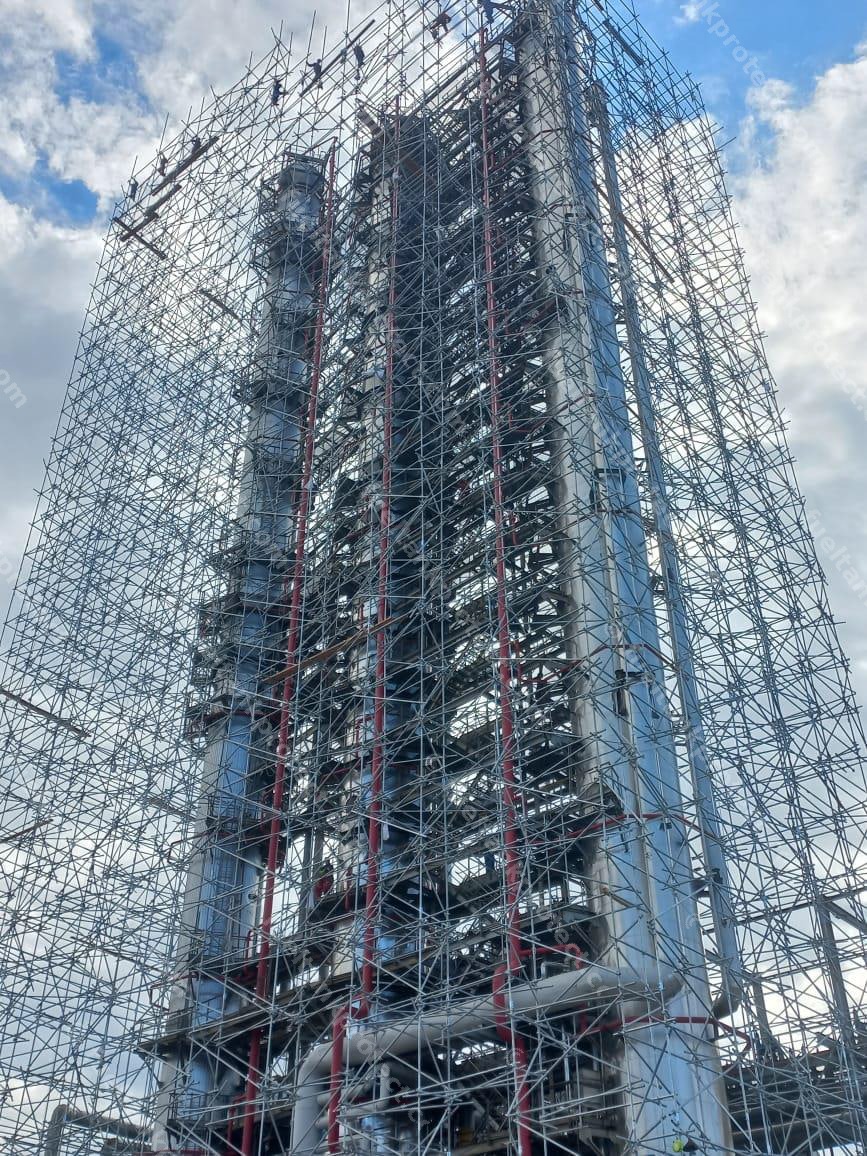
Bolt-oriented connections throughout eliminate site welding — critical for hazardous area deployment. Prefabricated components enable fast installation with standard equipment.

How The System Works

Engineering principles of impact mitigation — a passive multi-layer barrier that operates without power, sensors, or human intervention.

STEP 01
Direct Exposure Reduction
Multi-layer barrier creates protective separation between external threats and critical tank zones. Dome and vertical mesh intercept impacts before reaching roof equipment.
STEP 02
Energy Dissipation
Structural geometry and mesh barriers disrupt and dissipate impact energy through controlled deformation across the independent support framework.
STEP 03
Damage Probability Reduction
Layered protection architecture eliminates single points of failure. Multiple defensive layers ensure tank shell, roof systems, and critical equipment remain protected.
STEP 04
Fire-Risk Resilience
Protective separation shields tank roof zones from external heat sources and prevents direct flame impingement on critical surfaces, supporting operational continuity.
Unlike active systems requiring power, sensors, and human intervention, this passive engineered solution operates continuously without external energy inputs, maintenance-intensive components, or operational complexity.
External forces transfer from mesh barriers → ring beams → columns → independent foundations. The tank structure is completely bypassed — experiencing only incidental aerodynamic effects.

Deployment Scenarios

From a single pilot tank to full tank farm coverage — scalable architecture with proven rollout methodology.

Phase 01 — Pilot
Single Tank Baseline
10,000 m³ reference tank as proof-of-concept. Full monitoring and performance validation before broader commitment. Reduces initial capital exposure.
Timeline: 4–6 weeks
Phase 02 — Scale
Multi-Tank Rollout
Standardized design templates for common tank geometries enable efficient replication. Coordinated deployment with optimized logistics and resource planning.
Timeline: 3–6 months
Phase 03 — Optimize
Grouped Protection
Adjacent tanks sharing structural elements where site geometry permits. 15–25% cost reduction per tank. 20–30% faster deployment versus individual protection.
Cost saving: 15–25%

Proposed Path Forward

From initial assessment to full deployment — clear decision gates at every stage.

1
Site Review
2–4 wks
2
Asset Screening
1–2 wks
3
Concept Adaptation
4–6 wks
4
Engineering Package
6–8 wks
5
Pilot Installation
4–6 wks
6
Scale-Up Roadmap
Ongoing

Team Competence

Our team brings deep sectoral expertise from Russia's largest oil and gas operators — combined with UAE-licensed execution capability for the Gulf market.

Pavel Matyunin
Technical Concept Lead — Project & Solution Owner
Gazprom
Lukoil
Gazprom Neft
Tatneft
Surgutneftegas
Border Energy Sites
3,000+ Tanks Serviced
Light and dark petroleum products, crude oil, refined products, and specialty fuels across diverse operational environments.
UAE Licensed Entity
ECOCENTER Technical Services LLC — licensed for structural steel erection, electromechanical installation, and industrial installation activities.
Critical Nodes Understanding
Deep practical knowledge of tank vulnerabilities, roof zones, valves, and measuring nodes — enabling protection that doesn't interfere with tank operation.
HSE Certified Workforce
All personnel trained for hazardous production facilities, complying with international HSE standards for explosive and fire-hazardous environments.
عرض استراتيجي للبنية التحتية

الحماية الهندسية السلبية
لخزانات الوقود

نقدم نظام حماية متعدد الطبقات للخزانات، مصمم لتقليل مخاطر الأضرار والحرائق وتعطل التشغيل في منشآت تخزين الوقود الحيوية.

يُنفَّذ النظام دون أعمال سخنة، ودون توقف التشغيل، باستخدام هياكل فولاذية مستقلة وشبكات حماية وطلاءات عاكسة للحرارة.

طلب تقييم الموقع
المميزات الرئيسية
بدون أعمال لحام أو قطع — آمن بالكامل للمناطق الخطرة
بدون إيقاف تشغيل الخزان — الإنتاج مستمر أثناء التركيب
تركيب سريع من 4 إلى 6 أسابيع للخزان الواحد
هيكل مستقل — لا يُضاف حمل على جدار الخزان
قابل للتوسع من خزان واحد إلى منشأة كاملة
شركة مرخصة في الإمارات — قيد التسجيل

Start With a Pilot

A confidential site assessment is the first step. We propose pilot implementation on a single tank to evaluate performance before broader deployment.

ECOCENTER Technical Services
UAE Entity — Registration in Progress
CONTACT
Pavel Matyunin
Technical Concept Lead
REGION
UAE · Kuwait · Bahrain
Gulf Region
PILOT
Single tank implementation available.
Assessment under full confidentiality.
The objective is not theoretical protection.
The objective is practical reduction of asset vulnerability through a disciplined, locally executable, passive engineering solution.
Request Confidential Assessment